Blog
Jelly Force Blog: Ingredient Reads for Careful Buyers
Quick answer
The Jelly Force blog holds three posts. One compares the five-plant sales graphic with the nine ingredients on the printed label. One counts the 3 g of added sugar and 5 mg of caffeine in a gummy. One covers FDA findings of hidden prescription drugs in men's products. Each quotes the label first.
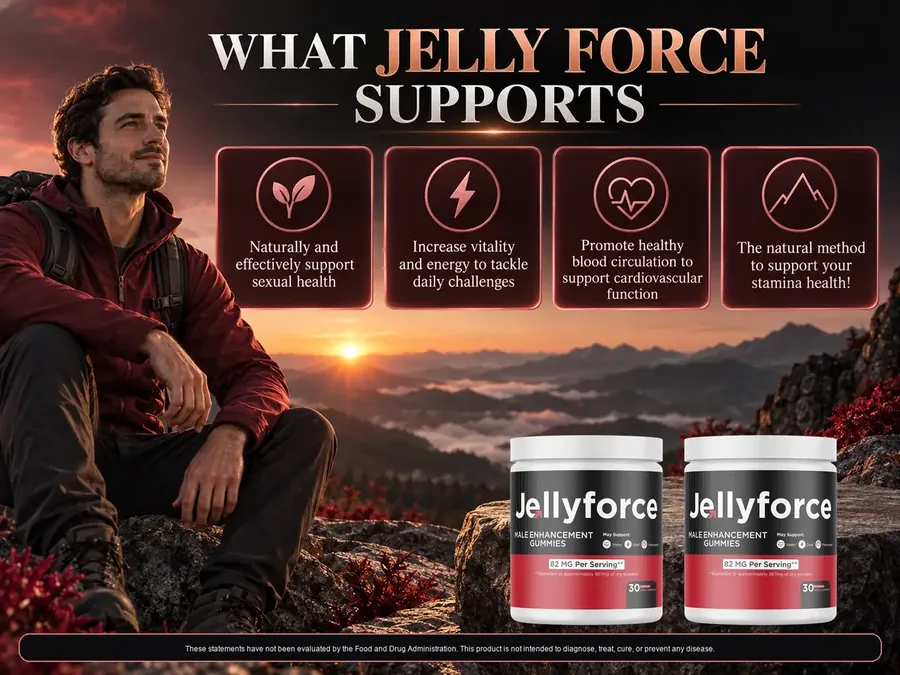
Which Jelly Force posts can you read today?
Three posts are live. Each takes one question a buyer asks in the aisle and answers it with printed figures rather than adjectives.
What is actually in a male enhancement gummy?
The sales graphic names five plants. The printed label names nine sharing 82 mg. The post reads both lists side by side and explains the 567 mg line.
Read more →Sugar and caffeine in gummies
Three grams of added sugar and 5 mg of caffeine per gummy, counted against a normal day of food and drink, with the FDA figure for adults.
Read more →Hidden drugs in men's products
FDA keeps finding undeclared prescription drugs in sexual enhancement products sold online. The post explains the pattern and what it means for buyers.
Read more →Why does one blend total shape all three posts?
Because the label prints a single number for nine ingredients. 82 mg covers muira puama, maca, catuaba, green tea extract, caffeine, ashwagandha, L-arginine, Tribulus terrestris and horny goat weed together.
- 82 mgBlend total per gummy
- 9Ingredients sharing it
- 1Amounts printed inside it
- 3 gAdded sugar per gummy
That single figure is why no post can say whether an ingredient here matches a study dose. Each post names the gap instead of stepping around it.
How does each post line the label up against the research?
This table sums up the core comparison in the three posts, with the source each one leans on.
| Topic | What the label gives | What the source says | Source |
|---|---|---|---|
| Maca | Inside 82 mg, amount not published | Evidence for sexual function is too limited to judge | Shin (review) |
| Green tea extract | Inside 82 mg, amount not published | Concentrated extracts linked to rare liver injury; interacts with nadolol | NCCIH (page) |
| Ashwagandha | Inside 82 mg, amount not published | Limited data over 2 to 4 months; rare liver reports; avoid in pregnancy | NCCIH (page) |
| Tribulus | Inside 82 mg, amount not published | No strong evidence for sexual or athletic performance claims | OPSS (review) |
| Caffeine | 5 mg per gummy, printed | About 400 mg a day is generally tolerated by healthy adults | FDA (update) |
| Product category | Sold as a dietary supplement | Undeclared prescription drugs keep turning up in these products | FDA (list) |
How is a Jelly Force post put together?
Every post runs through the same five steps. They keep label facts and research facts apart, so a reader can always tell which is which.
Copy the label line
The writer starts at the printed panel and records the wording exactly, or notes that an amount is not published.
Find the reference figure
Numbers come from NIH, NCCIH, the FDA, the Defense Department or a peer-reviewed review, never from a marketing page.
Set the two side by side
A table or a plain sentence shows the distance between what the gummy states and what the research studied.
Quote claims as claims
Anything the sales page says is marked as the seller's wording and kept out of the conclusion.
Check the language
Short sentences, no disease claims, no promised dates, and every source listed at the foot of the page.
Where are the ingredients without a post of their own covered?
Four plants on the label carry too little human research to fill a post honestly. The ingredients page holds them for now.
Which order suits a first-time reader?
If you plan to read all three, this sequence builds from the label in your hand to the wider market around it.
The ingredient list first
It explains why a graphic and a panel disagree, and what a blend total hides.
Sugar and caffeine second
With the blend problem clear, the two printed numbers are easier to place in your day.
Hidden drugs last
It is about the category rather than this bottle, and it explains why the buying route matters.
Then open the Supplement Facts page and read the panel with those three posts in mind.
What language will you not see in these posts?
The wording is kept in step with the evidence. That rules some phrases out and puts others in their place.
Pros
- "The label says" in front of any product claim
- "Not published" where a figure is missing
- Named sources with working links
- Plain ranges, such as about 400 mg a day
Cons
- Promised results or dates
- Any claim to treat, cure or prevent a condition
- Invented experts, studies or customer quotes
- Words like proven, best or number one
How can you check a post against your own bottle?
The posts quote the label, but your bottle settles any disagreement. Four checks take about two minutes.
Find the panel
It sits on the label wrap, next to the directions, the warning text and the distributor line.
Read the sugar line
Look for total sugars 3 g, including 3 g added sugar, marked 6% of the daily value.
Read the blend line
It should show 82 mg and name nine ingredients, with a figure beside the caffeine only.
Note the lot code
Compare it with the reference JEL-26/GO-2643. It matches a bottle to an order and proves nothing about what is inside.
How do you know a post is current?
Each post carries a last-updated date under its title, and this index was last checked on September 24, 2026.
A post is revised when the label changes, when a cited source updates, or when a reader reports an error. The date moves only when the wording does.
Can a post replace advice from your doctor?
No. A post can explain an ingredient. It cannot weigh your medicines, your blood pressure or your history.
Two things on this label make that check worth doing. Green tea extract and ashwagandha both carry rare liver-injury reports, and ashwagandha may interact with thyroid medicine.
Trouble with erections or drive can also be an early sign of heart disease or diabetes. That is a reason to book an appointment rather than to buy a gummy, and no post here suggests otherwise.
Where do you go after the blog?
The posts stop where the evidence stops. These three pages pick up the questions a reader usually asks next.
See the full panel
Every printed line from the label, with the other ingredients and the storage text.
Read more →Check the refund window
Sixty days from purchase, and how each pack size sits against it.
Read more →Order through the right channel
What an authorized retailer is, and what to check before paying.
Read more →Questions about the Jelly Force blog
How many posts are there?
Three. New posts are added to this index when they go live, and the date under the title on this page moves with them.
Why is there no post on muira puama or catuaba?
Because there is very little human research on either, and no federal fact sheet. Both are described on the ingredients page instead.
Do the posts say the product works?
No. They compare label wording with published research. No study has tested the finished gummy, so no post claims a result.
Do they make any medical claim?
None. No post here claims anything about erectile dysfunction, testosterone or any disease, and none suggests the gummy replaces a doctor's care.
Who writes them?
The Jelly Force Editorial Desk, the same team behind the rest of the site. No outside expert is quoted, because none has reviewed this product for us.
Can I suggest a topic?
Yes. Send it to [email protected], Mon-Fri 9:00am-5:00pm ET. Topics tied to a label ingredient or a repeated buyer question are taken first.
Are the posts sponsored?
Gojellyforce earns a share of sales made through this site, and these pages carry order buttons. That is exactly why each post sticks to label facts and cited sources.
References
- U.S. Food and Drug Administration (2024). Spilling the Beans: How Much Caffeine is Too Much?.
- U.S. Food and Drug Administration (2026). Tainted Sexual Enhancement Products.
- National Center for Complementary and Integrative Health (2023). Ashwagandha: Usefulness and Safety.
- National Center for Complementary and Integrative Health (2025). Green Tea: Usefulness and Safety.
- NIH Office of Dietary Supplements (accessed 2026). Dietary Supplements for Exercise and Athletic Performance.
- Operation Supplement Safety, U.S. Department of Defense (2024). Tribulus terrestris as an ingredient in dietary supplements.
- Shin BC, Lee MS, Yang EJ, Lim HS, Ernst E (2010). Maca (L. meyenii) for improving sexual function: a systematic review. BMC Complementary and Alternative Medicine 10:44.
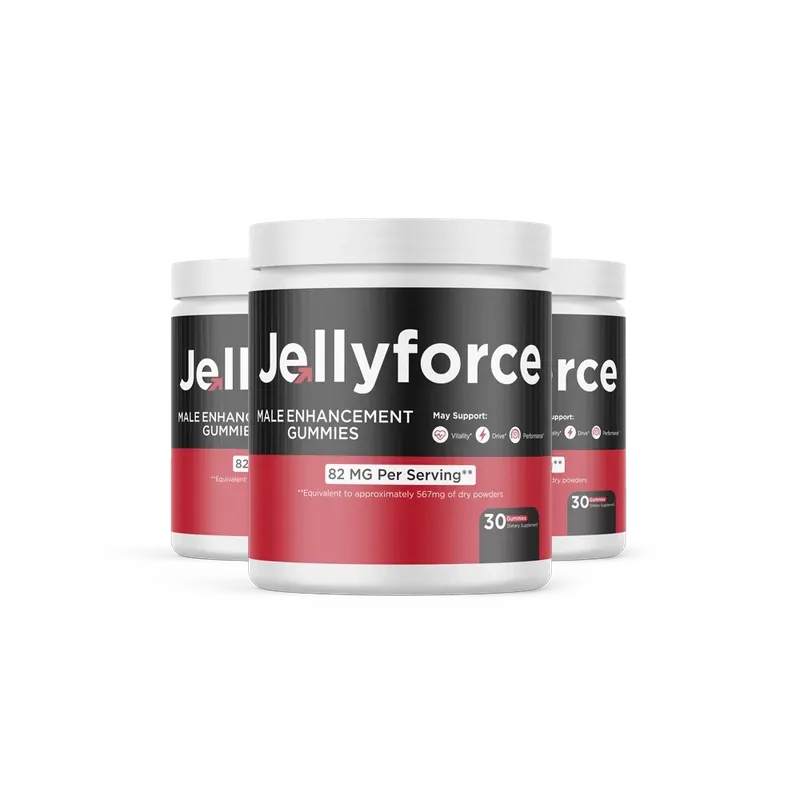
Ready when you are
Order Jelly Force from the authorized outlet
Packs of 1, 2, 3 or 6 bottles, 30 gummies each, priced on the secure order page. Every order has a 60-day money-back guarantee. Questions first? Call +1 (302) 200-3480.

Keep reading
Jelly Force Ingredients
All nine blend ingredients, what the research actually says, and why the pack graphic names only five.
Read →AnswersJelly Force FAQ
35 short answers on the one-gummy serving, the 82 mg blend, sugar, caffeine and refunds.
Read →Start hereJelly Force Guides
Every page here sorted by the question it answers, with a five-page reading route.
Read →