Testing
Jelly Force Testing and Quality: What the Ten Seals Mean
Quick answer
Ten seals sit beside the product, and every one of them is a statement by the seller. None names an outside auditor. The label adds one line of its own, produced in a GMP facility. No certificate of analysis and no allergen statement have been published, so the free-from seals stay claims rather than test results.
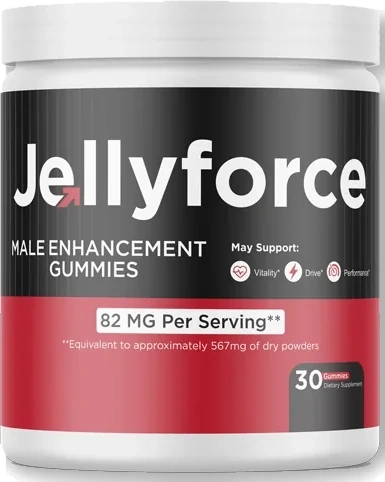
What are the ten Jelly Force seals?
Ten small graphics shown beside the product images. Each is a statement made by the party selling the bottle.
Not one of them is a laboratory result, and this website can verify none of them. Here they are as they appear, decoded below.
 FDA-registered facility
 GMP practices
 Manufactured in USA
 Natural ingredients
 Non-GMO
 Naturally gluten-free
 Dairy-free
 Vegetarian
 Doctor formulated
 60-day money-back
- 10seals shown
- 0auditors named
- 0lab reports published
- 1CoA reference, no certificate
What does each Jelly Force seal mean and not mean?
The middle column is the fair reading of each seal. The right column is the belief the seal does not support, which is usually the reason it was printed.
| Seal | What it means | What it does not mean |
|---|---|---|
| FDA-registered facility | The plant is said to sit on the FDA's facility register | That the FDA approved, inspected or endorsed these gummies |
| GMP | The maker says it follows Good Manufacturing Practice rules | That an outside auditor certified this run |
| Manufactured in USA | The gummies are said to be made in the United States | That the ingredients were grown here; the label says globally sourced |
| All natural | The blend is built from plant extracts and an amino acid | That natural means gentle, or safe with your medicine |
| Non-GMO | The seller says no ingredient is genetically modified | That a certifier tested the batch for GMO material |
| Gluten-free | No gluten-bearing ingredient appears in the list | Protection from cross-contact, since no allergen statement exists |
| Dairy-free | No milk ingredient appears in the list | A safe choice for a milk allergy, on the same missing evidence |
| Vegetarian | No animal ingredient is listed; the gummy uses apple pectin | Vegan certification, or how each raw material was handled |
| Physician formulated | The seller says a doctor designed the formula | Which doctor, or that any doctor endorses the product |
| 60-day money-back | A refund may be sought within 60 days from purchase, unless the sales page prints a longer window | Any result, and it does not pay your return postage |
What does the Jelly Force label say about the factory?
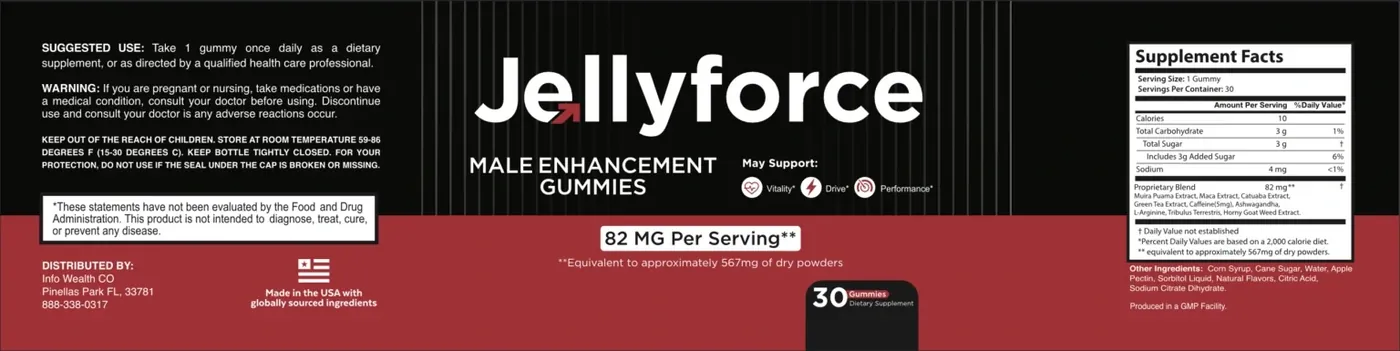
Two lines, and both are brief. The wrap prints made in the USA with globally sourced ingredients, and produced in a GMP facility.
Read them together. The gummies are assembled in the United States from raw materials bought anywhere in the world.
- Made in the USA with globally sourced ingredients (as printed on the label)
- Produced in a GMP facility, as printed, with no auditor named
- Distributed by Info Wealth CO, Pinellas Park, FL 33781, 888-338-0317 (as printed on the label)
- A distributor address is not the address of a factory
Has any laboratory tested Jelly Force?
Nothing published says so. That is the central gap on this page, and it is worth stating plainly rather than dressing up.
A CoA reference exists, JEL-2643-26-GO, alongside lot JEL-26/GO-2643. A reference is a filing name. The certificate it points to has not been shared, and no laboratory is named.
Pros
- A lot number and a CoA reference exist for this run
- The maker states GMP practice and a registered facility
- The panel prints exact figures for calories, carbohydrate, sugar, sodium and caffeine
Cons
- No certificate of analysis has been published
- No testing laboratory is named
- No amount is given for eight of the nine blend ingredients
- No test for heavy metals, microbes or contaminants is shown
- No research on the finished gummy exists
Why do the free-from seals need an allergen statement?
Because a seal describes the recipe and an allergen statement describes the factory. Only one of those two is published here.
The other ingredients line reads: Corn syrup, cane sugar, water, apple pectin, sorbitol liquid, natural flavors, citric acid, sodium citrate dihydrate. No wheat, no milk, no egg, no soy and no nut appears in it. That supports the recipe half of the claim.
| Free-from seal | Supported by the ingredient list? | What is still unknown |
|---|---|---|
| Gluten-free | Yes, no gluten source is listed | Shared lines, shared equipment, cross-contact |
| Dairy-free | Yes, no milk ingredient is listed | The same, plus how flavors were carried |
| Vegetarian | Yes, the gel is apple pectin rather than gelatin | Whether every raw material was handled the same way |
| Non-GMO | Not testable from the label | No certifier and no mention on the wrap |
What does the physician formulated seal leave out?
A name. No physician is identified on the label, in the product images or anywhere in the sales material.
Without a name there is no specialty to check, no institution to ask and no way to confirm the person exists. This site does not invent one to fill the gap.
- No doctor is named on the bottle or the packaging
- No credential, specialty or institution is given
- No statement of who reviewed the formula, or when
- No endorsement of the finished product by any clinician
Treat the seal as a design choice rather than a credential. Your own doctor, who can see your medicines, is the clinician who matters here.
What would stronger quality proof for Jelly Force look like?
Five documents would move this page from claims to evidence. None of them is unusual, and buyers are entitled to ask for all five.
A published certificate of analysis
The actual document behind JEL-2643-26-GO, dated, with the testing laboratory named.
A contaminant panel
Results for heavy metals, microbes and pesticide residue on the finished gummy.
The blend broken out
Milligrams for all nine ingredients inside the 82 mg, not only the 5 mg of caffeine.
A named GMP auditor
The certifying body, the certificate number and the date of the last inspection.
A full allergen statement
A line covering cross-contact and shared equipment, so the free-from seals mean something.
Why does quality matter more with a proprietary blend?
Because a blend hides the doses, and doses are where safety questions live. The whole blend is 82 mg, shared by nine ingredients, and eight of the nine have no printed amount.
Two of those ingredients carry real cautions. Concentrated green tea extract has been linked to rare liver injury and green tea interacts with the heart medicine nadolol (NCCIH, 2025). Ashwagandha has its own rare liver reports and may interact with thyroid medicine (NCCIH, 2023).
A third, Tribulus terrestris, has been reviewed by the US Department of Defense, which found no strong evidence for sexual or athletic claims alongside a few severe liver and kidney case reports (Operation et al., 2024).
Jelly Force testing and quality: common questions
Has Jelly Force been tested by an outside laboratory?
Nothing published shows that. A CoA reference, JEL-2643-26-GO, exists as a filing name, and the certificate behind it has not been shared. No testing laboratory is named anywhere in the material.
Does the FDA-registered facility seal mean FDA approval?
It does not. Facilities that make supplements register with the FDA, which is paperwork rather than a verdict. The agency does not approve dietary supplements before they go on sale.
What does produced in a GMP facility actually promise?
That the maker says it follows Good Manufacturing Practice rules. The line is printed on the label. No auditor, certificate number or inspection date appears beside it.
Are the gluten-free and dairy-free seals reliable?
They match the ingredient list, which names no wheat and no milk. No allergen statement is published, so nothing addresses shared equipment or cross-contact. Read them as claims.
Who is the physician behind the physician formulated seal?
No name is given. No physician is named on the label, on the packaging or in the product pack. Without a name there is nothing to look up and nothing to weigh.
Does a seal tell me how much maca or caffeine I am getting?
No. Only the caffeine has a number, 5 mg, and that comes from the panel rather than a seal. The rest of the 82 mg blend is not broken out.
Is non-GMO on this product verified by anyone?
Not that we can see. No certifying body is named and the label does not mention GMO status. It is a seller statement shown as a graphic.
What single check can I actually do myself?
Read the printed panel and the seal under the cap. The batch check page walks through both, and the panel is set out on the Supplement Facts page.
References
- National Center for Complementary and Integrative Health (2023). Ashwagandha: Usefulness and Safety.
- National Center for Complementary and Integrative Health (2025). Green Tea: Usefulness and Safety.
- Operation Supplement Safety, U.S. Department of Defense (2024). Tribulus terrestris as an ingredient in dietary supplements.
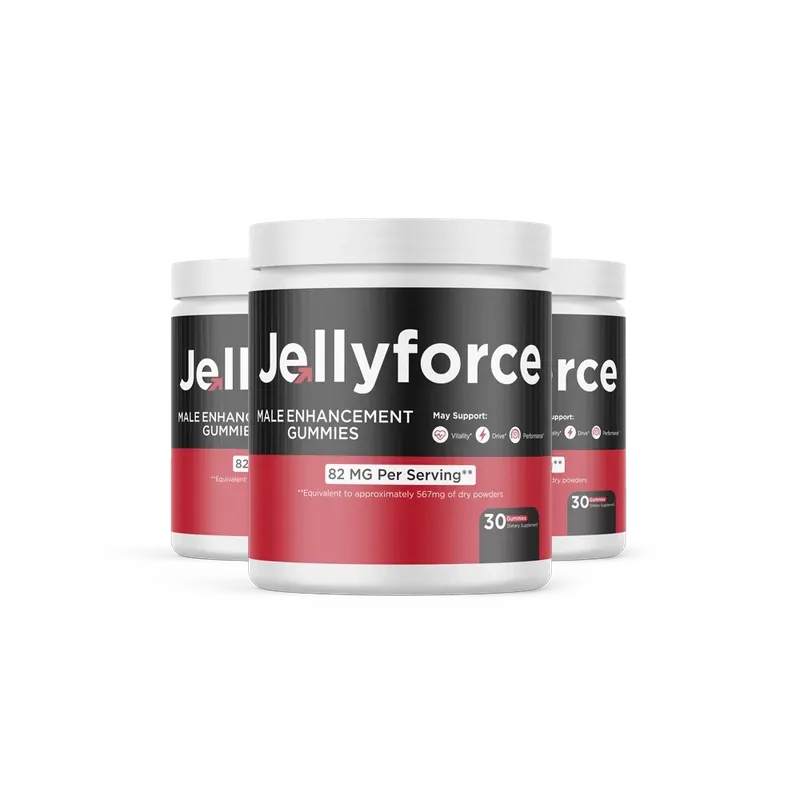
Ready when you are
Order Jelly Force from the authorized outlet
Packs of 1, 2, 3 or 6 bottles, 30 gummies each, priced on the secure order page. Every order has a 60-day money-back guarantee. Questions first? Call +1 (302) 200-3480.

Keep reading
Jelly Force Supplement Facts
The printed panel, the 82 mg blend against the 567 mg equivalence line, and the sugar and caffeine rows.
Read →The productJelly Force Ingredients
All nine blend ingredients, what the research actually says, and why the pack graphic names only five.
Read →Buyer checksJelly Force Batch Check
Check a Jelly Force bottle the day it lands: the seal under the cap, the printed label lines, the lot and CoA, and which number to call.
Read →