Buyer's checklist
Choosing a Men's Gummy: Jelly Force on the Checklist
Quick answer
Check eight things on a men's gummy: sugar per gummy, the size of the blend, how many ingredients share it, whether amounts are printed, what the equivalence line means, who the seller is, what the seals prove, and how the refund works. Run on Jelly Force, the panel passes on plain labeling and honest cautions, and falls short on printed amounts.
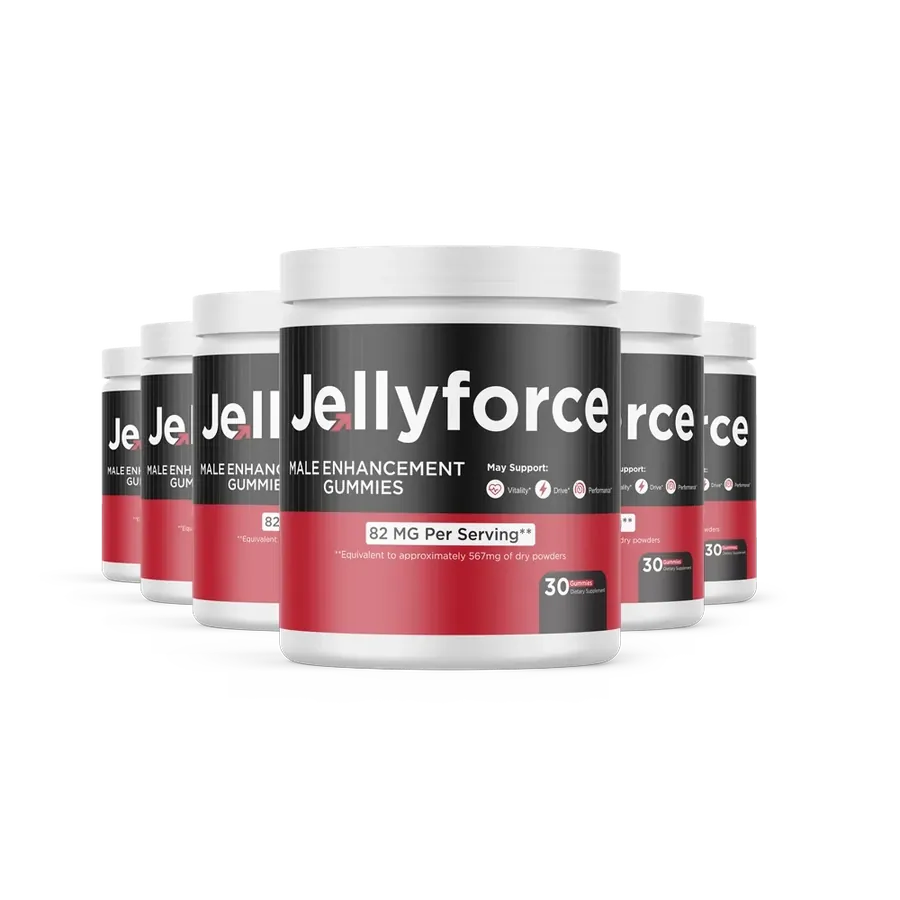
What should you check before buying any men's gummy?
Eight things, and the label answers most of them rather than the sales page. Six take a minute each.
| Check | What good looks like | Jelly Force |
|---|---|---|
| Sugar per gummy | Printed, with a percent daily value | 3 g added sugar, 6% DV: printed |
| Blend size | Stated in milligrams | 82 mg, stated |
| Ingredients sharing it | Few, and named | Nine, all named |
| Individual amounts | A number beside each one | Only caffeine, at 5 mg |
| Equivalence line | Explained, not used as the dose | 567 mg of dry powders, unexplained on the pack |
| Graphic matches label | Same list on both | Graphic names five of the nine |
| Seller identified | Name, phone, address | Distributor and order desk both published |
| Refund window | Long enough to test and return | 60 days from purchase |
Four are clean passes, two are partial and two are misses. This page works through them one at a time.
How much sugar is in one gummy, and does it matter?
Three grams of added sugar per gummy, which the panel puts at 6% of the daily value. That is the trade you make for a chewable instead of a capsule.
Corn syrup and cane sugar head the other-ingredients list, because sugar is what holds a gummy together. A sugar-free gummy has swapped in something else, usually a sugar alcohol.
- 3 gadded sugar per gummy
- 6%of the daily value in one
- 90 gacross a full 30-day bottle
For most men that is minor. Count it anyway: 6% a day from a supplement is 6% you cannot spend elsewhere.
How big is the blend, and how many ingredients share it?
Eighty-two milligrams in total, shared by nine ingredients. That is the single most useful number on the whole pack.
Supplement Facts
Serving size: 1 gummy · Servings per container: 30
| Amount per serving | Amount | % Daily Value |
|---|---|---|
| Calories | 10 | |
| Total carbohydrate | 3 g | 1% |
| Total sugars (including 3 g added sugar) | 3 g | 6% (added sugar) |
| Sodium | 4 mg | <1% |
| Proprietary BlendMuira puama extract, Maca extract, Catuaba extract, Green tea extract, Caffeine, Ashwagandha, L-Arginine, Tribulus terrestris, Horny goat weed extract | 82 mg | † |
† Daily Value not established. The blend is 82 mg in total, equivalent to approximately 567 mg of dry powders, as the label puts it; the amount of each of the nine ingredients inside it is not published. Other ingredients: Corn syrup, cane sugar, water, apple pectin, sorbitol liquid, natural flavors, citric acid, sodium citrate dihydrate. Allergen statement: not published.
Divide 82 mg nine ways and the arithmetic is unforgiving, and the split is almost certainly uneven. Studies of L-arginine measure it in grams rather than milligrams (NIH ODS), and L-arginine is one of nine names on this line.
That is not a reason to dismiss the product. It is a reason to keep expectations attached to the panel rather than the sales page.
What does the 567 mg of dry powders line mean?
It describes the raw plant material before extraction, not what sits in the gummy. The amount in the gummy is 82 mg, and the label says so on the same pack.
Equivalence lines are common and not dishonest in themselves. They mislead when a shopper reads the bigger number as the serving size.
Whichever number appears in the Supplement Facts panel is the one you are taking. Every other figure on the bottle is context.
Does the marketing graphic match the printed label?
Not here. The Inside Jelly Force graphic names five ingredients while the Supplement Facts panel lists nine.

What the graphic leaves out
- Green tea extract
- Caffeine, the one ingredient with a number
- Tribulus terrestris
- Horny goat weed extract
The panel wins any disagreement, on this product and on every other one. A graphic is marketing; the panel is the regulated statement.
Read only the graphic and you miss the caffeine, the item most likely to matter to a coffee drinker. The full read is on the ingredients page.
How do you judge the hidden-drug risk in this category?
By looking at who is selling, not at how the bottle looks. Men's products are one of the categories where undeclared prescription ingredients keep turning up.
Here the distributor is printed on the wrap, the order desk number is published, and returns go to a street address. None of that proves anything about the bottle, and it is still more than the products on that list offer.
What do the seals on the bottle actually prove?
Less than they suggest, which is true across the shelf. Each one describes a claim about the facility or the formula, and none is an endorsement.
 FDA-registered facility
 GMP practices
 Manufactured in USA
 Natural ingredients
 Non-GMO
 Naturally gluten-free
 Dairy-free
 Vegetarian
 Doctor formulated
 60-day money-back
| Seal | What it claims | What it does not mean |
|---|---|---|
| FDA-registered facility | The plant is registered with FDA | Not FDA approval of the product |
| GMP | Good manufacturing practices | Not a published audit you can read |
| Made in USA | Manufactured domestically | Ingredients are globally sourced, per the label |
| Gluten-free, dairy-free | A free-from claim | No allergen statement is published |
| Physician formulated | A formulation claim | No doctor is named anywhere |
| Money-back | A purchase policy | Not a promise about results |
What makes a money-back guarantee usable?
Three things: a window long enough to finish a fair trial, a clear claim route, and a written answer on who pays return shipping. Two months clears the first bar for a daily gummy.
Read the window before you order
Sixty days from purchase, unless the sales page prints longer on the day you buy. Ask before you pay if the two disagree.
Find the phone number now, not later
Claims start with a call to +1 (302) 200-3480 quoting your order ID. A guarantee with no phone number behind it is a slogan.
Check who pays the postage
On this product the buyer pays return shipping and is told to use tracking. That cost is part of the real price of trying it.
Know how long the money takes
Refunds are described as 3-5 business days after the returned bottles are credited, then 5-10 days to show on your card. Build that into your expectations before you post the parcel.
The mechanics sit on the refund policy page, and trial timing on the results timeline page.
Where does Jelly Force land on the checklist?
Middle of the pack, with an honest label and a small blend. It does better than the category on transparency about safety and worse on amounts.
Pros
- A caffeine figure is printed, which many rivals leave out entirely
- The warning block, storage range and distributor are all on the wrap
- Nine ingredients are named in full on the panel
- The refund route has a phone number, an address and a stated window
Cons
- Eight of nine amounts are folded into one 82 mg line
- The front-of-pack 567 mg figure is easy to misread as the dose
- The marketing graphic and the panel disagree about what is inside
- No study on the finished gummy has been published
Judge it on that basis, not on the sales copy. For the habits that sit underneath any product like this, the men's vitality guide covers them. See the current packs
Checklist questions about men's gummies
What is the first thing to look at on a gummy label?
The Supplement Facts panel, not the front of the bottle. If the amounts sit inside a blend, every later question gets harder to answer.
Is a proprietary blend always a bad sign?
Not always, but it costs you information. You see one total instead of nine amounts, so you cannot line the product up against any study that used a measured dose.
How much sugar is too much in a daily gummy?
There is no single figure, and one gummy at 3 g is a small part of a day. The number to watch is your total across everything you eat.
Does a bigger milligram number mean a better product?
No. A large blend split many ways still leaves each part small, and printed amounts tell you more than a big hidden total.
Why does an equivalence line appear on a label at all?
Because extracts are concentrated, so sellers quote the raw material they started with. It describes the process, not the amount in the gummy.
Do the seals on the bottle mean anything?
They describe claims about the facility and the formula. An FDA-registered facility is a registration, not an approval, and no allergen statement is published.
How long should a refund window be?
Long enough for a fair trial and a return parcel. Sixty days from purchase clears that bar, provided you decide before the last fortnight.
What should make you walk away from a men's product entirely?
No named seller, no phone number, no printed panel, or promises that sound like a prescription. Any one is reason enough to close the tab.
References
- U.S. Food and Drug Administration (2026). Tainted Sexual Enhancement Products.
- NIH Office of Dietary Supplements (accessed 2026). Dietary Supplements for Exercise and Athletic Performance.
Ready when you are
Order Jelly Force from the authorized outlet
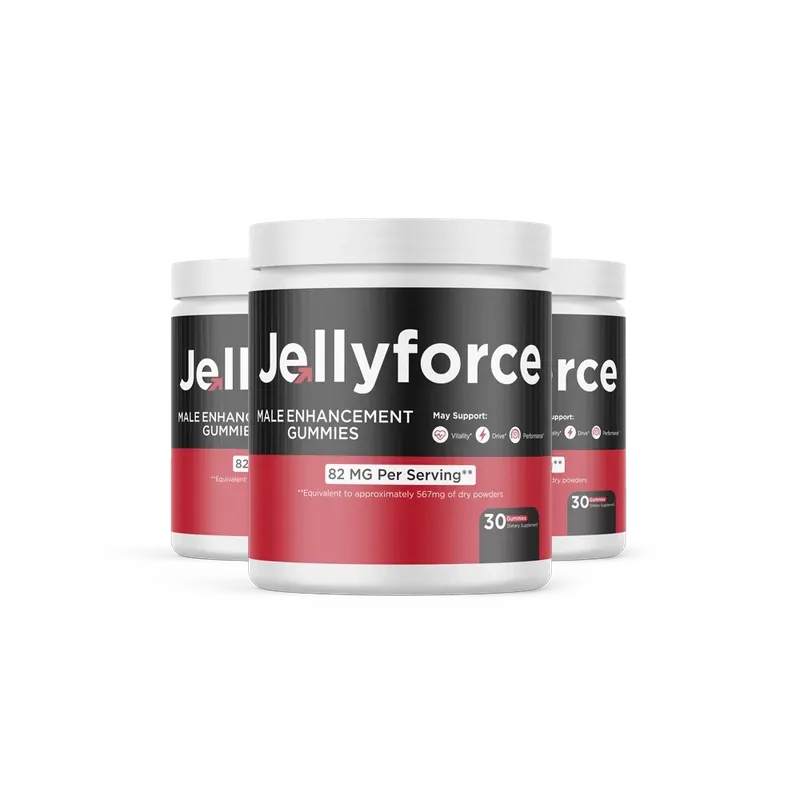
Packs of 1, 2, 3 or 6 bottles, 30 gummies each, priced on the secure order page. Every order has a 60-day money-back guarantee. Questions first? Call +1 (302) 200-3480.

Keep reading
Jelly Force Supplement Facts
The printed panel, the 82 mg blend against the 567 mg equivalence line, and the sugar and caffeine rows.
Read →The productJelly Force Ingredients
All nine blend ingredients, what the research actually says, and why the pack graphic names only five.
Read →GuideMen's Energy and Drive Guide
A plain guide to energy and drive in men: sleep, weight, alcohol, movement, blood pressure, blood sugar, and where a gummy fits.
Read →